Local history
The stories behind the hills
Pendle's witches, Colne's Titanic bandmaster, Tolkien's Ribble Valley and the ruined hall that found its way into Jane Eyre.
A Corner of Lancashire Steeped in Stories
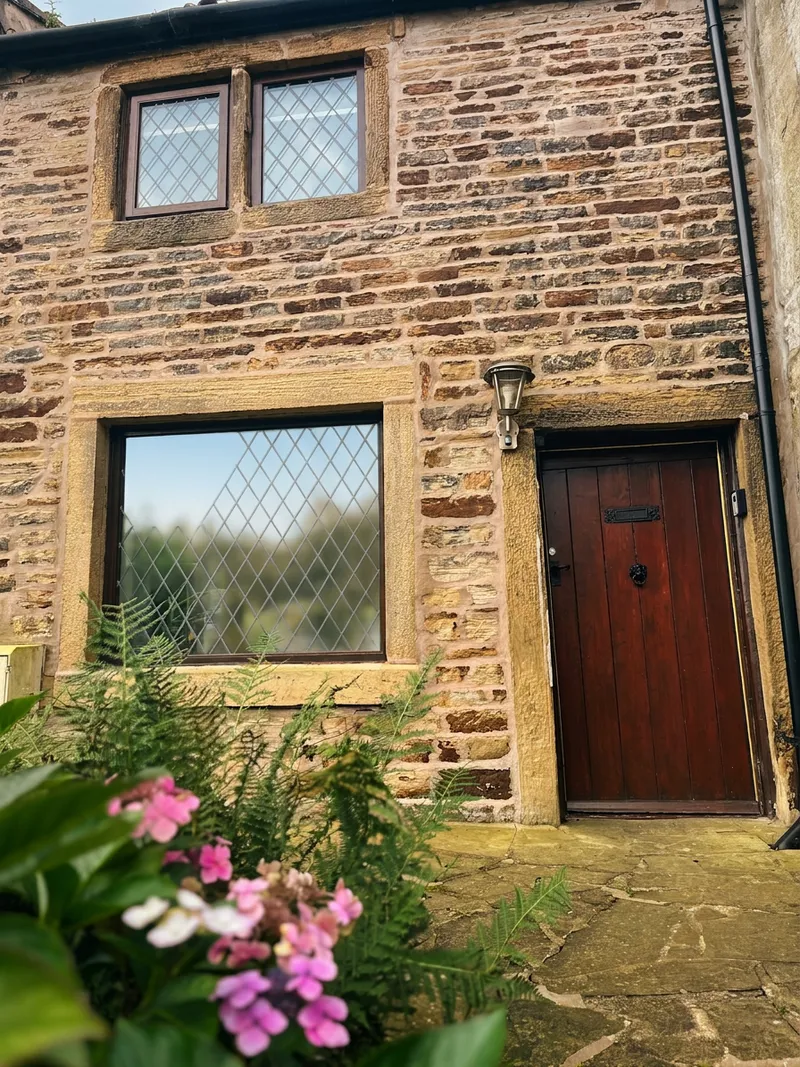
Spring Cottage has been part of Trawden's story for three to four hundred years. When its stones were laid, this valley was still known as the Forest of Trawden: medieval cattle farms were giving way to yeoman farmhouses, and families were working hand-looms by the window to make ends meet.
Step outside today and you are within a short drive of some of the most remarkable tales in English history. The Pendle Witches, tried at Lancaster in 1612, lived in the farms and hamlets below Pendle Hill, the very hill where George Fox had the vision that founded the Quakers forty years later. Over the moor, the Brontë sisters wrote Jane Eyre and Wuthering Heights, and Wycoller's ruined hall, a pleasant walk from the cottage, is thought to be Charlotte's Ferndean Manor. In Colne, the town remembers Wallace Hartley, the Titanic's bandmaster, who played on as the ship went down.
Here are our favourite local stories, with tips on where to see them for yourself.
1 of 13
Trawden: a medieval hunting forest
Trawden's name lives on in the parish of Trawden Forest. This was never a forest of trees in the modern sense, but a hunting ground. Around 1100 it was granted to Robert de Lacy, and by the end of the 1200s five "vaccaries" (great cattle farms) were established here, at Over and Nether Wycoller, Winewall and Over and Nether Beardshaw, while deer roamed the land between. When the Earl of Lancaster was executed in 1322 the forest passed to the Crown, and in 1507 it was formally "disafforested" and divided among the tenants.
What followed shaped the village you see today. In the first half of the 1600s a new class of yeoman farmer began building substantial stone houses, and the earliest homes still standing in the parish date from this period. Hand-loom weaving became the staple industry, reaching its peak in the early 1800s. Then came the mills: Pave Mill in 1844, Hollin Mill in 1855, Brook Mill in 1860, strung along Trawden Brook like beads on a thread. Spring Cottage, with its 300-year-old stonework, belongs to that older world of farmhouses and weavers' cottages.
Drive from Trawden: none, it's on the doorstep.
2 of 13
Trawden today: the village that saved itself
Trawden made national headlines for the best of reasons. In 2014, with the community centre about to close and the last shop close to shutting, a group of villagers decided to fight back. One by one they took over the community centre, the shop and the library, run by a pool of around 120 volunteers working two-hour shifts. Then, in 2021, the village's last pub came up for sale. Residents had it listed as an asset of community value, and the village of around 2,000 people raised £520,000 to buy it. The Trawden Arms reopened in November 2021, and the Observer reported that Trawden had become the first village in Britain to buy and run its own shop, library, community centre and pub.
The next spring, the Sunday Times Best Places to Live guide named Trawden the best place to live in the North West, asking: "Is this the most community-spirited village in the country?" We think so.
Drive from Trawden: a few minutes' stroll from the cottage (about 0.4 miles by road to the Trawden Arms).
3 of 13
Boulsworth Hill: the moor above the cottage
The great whaleback of moorland rising behind Trawden is Boulsworth Hill. Its summit, Lad Law, stands at 517 metres, the highest point in the South Pennines, and on a clear day the view takes in Pendle Hill, the Forest of Bowland and the Yorkshire Dales. The hill has a stubborn streak: an Enclosure Act of 1821 allowed the whole of Boulsworth to be fenced off, but the work was begun and never finished once it became clear the land was too poor to farm. It was even meant to be a highlight of the Pennine Way, which in the end passed to the east. Today the Brontë Way and the Pendle Way both run along its slopes, and Trawden is the nearest settlement to the summit.
Drive from Trawden: none, on foot from the cottage.
Sources
4 of 13
Wycoller and Jane Eyre
Hidden in a wooded valley just over the hill from Trawden, Wycoller feels like a village that time forgot, and in a sense it was. A busy hand-loom weaving community in the late 1700s, it emptied in the 1800s as weavers left for the new mills, and by the 1890s it was almost deserted.
At its heart lie the romantic ruins of Wycoller Hall, a late 16th-century manor house built on land held by the Hartley family. Its last squire, Henry Owen Cunliffe, a keen gambler, died heavily in debt in 1818. The estate was broken up and the hall slowly plundered for stone; some of it went to build a cotton mill in Trawden. Wycoller Hall is thought to be the inspiration for Ferndean Manor, where Mr Rochester retreats in Charlotte Brontë's Jane Eyre, and the hall was used to illustrate an 1898 edition of the novel.
Seven bridges cross Wycoller Beck, among them the single-slab Clam Bridge, possibly over a thousand years old, and the twin-arched packhorse bridge, which appears in the film The Railway Children. Lancashire County Council bought the village in 1973 and it is now a country park.
Drive from Trawden: about 10 minutes (around 2 miles), or a lovely walk.
5 of 13
Haworth and Brontë Country
Only a few miles separate Trawden from the moors that made the Brontës. Charlotte, Emily and Anne grew up in the parsonage at Haworth, where their father Patrick was the minister, and there, under the pen names Currer, Ellis and Acton Bell, they wrote some of the most extraordinary novels in English, among them Jane Eyre, Wuthering Heights and The Tenant of Wildfell Hall. Their home is now the Brontë Parsonage Museum.
The sisters knew this side of the border too. The long-distance Brontë Way runs from Wycoller over the moor to Haworth, and Charlotte is thought to have passed through Wycoller on her way to Gawthorpe Hall. There's even a Colne connection: the first curate of Christ Church in Colne, the Reverend David Pryce, proposed to Charlotte in 1839. She turned him down.
Drive from Trawden: about 25 minutes (around 10 miles).
6 of 13
The Pendle Witches: what really happened in 1612
Forget pointed hats. The real story of the Pendle Witches is one of poverty, fear and a frightening legal system. In March 1612 a young woman named Alizon Device, out begging near Colne, asked a pedlar from Halifax, John Law, for some pins. He refused, and moments later collapsed, probably from a stroke. Alizon believed she had cursed him, and confessed.
The local magistrate, Roger Nowell, soon drew in two rival families, each headed by an elderly woman with a long local reputation for witchcraft: Elizabeth Southerns, "Old Demdike", Alizon's grandmother, and Anne Whittle, "Old Chattox". On Good Friday 1612 friends of the Demdike family met at Malkin Tower, Demdike's home, where they were accused of plotting to blow up Lancaster Castle to free the prisoners.
At the August trials in Lancaster, the star witness was Alizon's nine-year-old sister, Jennet. Ten people were found guilty and hanged on the moors above the town on 20 August 1612. Demdike never stood trial: she died in the castle's cells. The court clerk, Thomas Potts, published a detailed account, which is why the case is among the best documented in English history.
Drive from Trawden: Lancaster Castle is about 1 hour 15 minutes (around 53 miles).
7 of 13
In the footsteps of the witches: Barley, Newchurch and the Witch Trail
The villages beneath Pendle Hill are where the story lived, and they're wonderfully atmospheric to explore. Nobody knows exactly where Malkin Tower stood. The only firm record says it was somewhere in the Forest of Pendle, and digs have failed to find it, though in 2011 water engineers uncovered a 17th-century cottage, with a mummified cat sealed in its wall, near Lower Black Moss reservoir by Barley.
In Newchurch-in-Pendle, look up at the tower of St Mary's Church. On its west face is an oval carving known as the "Eye of God", said to watch over the village and ward off evil. In the churchyard, local legend links a Nutter family headstone to Alice Nutter, one of the accused, though historians doubt she was buried there.
Above Barley, the Pendle Sculpture Trail winds through Aitken Wood. It opened in 2012 for the 400th anniversary, with ten ceramic plaques, one for each of the Pendle people who were hanged, among the sculptures.
For the full journey, follow the 45-mile self-guided Pendle Witch Trail driving route from Pendle Heritage Centre in Barrowford all the way to Lancaster Castle.
Drive from Trawden: Barley about 20 to 25 minutes (around 7 miles); Newchurch about 20 minutes.
Sources
- Wikipedia, Malkin Tower (location unknown, 2011 cottage)
- Wikipedia, St Mary's Church, Newchurch in Pendle (Eye of God, Nutter headstone)
- Visit Pendle, Pendle Sculpture Trail (ten plaques, 2012)
- Visit Lancashire, Pendle Witch Trail, Lancaster to Pendle (45 miles, route from Pendle Heritage Centre)
- Let's Walk in Pendle, Sculpture Trail print guide (park in Barley, no parking at Aitken Wood):
8 of 13
Pendle Heritage Centre, Barrowford
If you want the whole story in one place, start at Park Hill in Barrowford, home of the Pendle Heritage Centre. The Bannister family settled here in the 1400s, and the house grew from a medieval timber-framed building into the stone farmhouse you see today, with a 1661 datestone. Its most famous descendant is Sir Roger Bannister, the first athlete to run a mile in under four minutes.
The museum tells the story of the Pendle Witches, George Fox and the Quakers, and the vernacular buildings of Pendle Forest, the same kind of stone farmhouses and cottages you're staying among in Trawden. There's an 18th-century walled garden, a bluebell wood and a tea room too.
Drive from Trawden: about 10 to 15 minutes (around 4 miles).
9 of 13
Pendle Hill and George Fox's vision
Pendle Hill rises to 557 metres, a great isolated whaleback that dominates the skyline for miles around, and you'll see it from all over Trawden. In 1652 a young preacher named George Fox was travelling through Lancashire when he felt compelled to climb it. "I was moved of the Lord to go atop of it," he later wrote, "and when I came atop of it I saw Lancashire sea; and there atop of the hill I was moved to sound the day of the Lord; and the Lord let me see atop of the hill in what places he had a great people to be gathered."
That vision is remembered as the beginning of the Quaker movement, and Quakers still make pilgrimages to the hill today. Pendle has also given its name to a Quaker study centre near Philadelphia.
Drive from Trawden: Barley is about 20 to 25 minutes (around 7 miles).
10 of 13
Colne: market town on the hill
A mile and a half down the road, Colne has been a market town for centuries. Its parish church, St Bartholomew's, dates from before 1122, when the market was held in the churchyard, and it is Grade I listed. By the 1400s Colne was the main market town of the area and a centre of the woollen trade, famous for a lightweight cloth called kersey. In 1775 the town built a grand Piece Hall (later the Cloth Hall) for the sale of woollen and worsted cloth. It was demolished in 1952.
The Industrial Revolution brought cotton, helped by the completion of the Leeds and Liverpool Canal in 1816 and the railway in 1848. By 1891 Colne had 30 cotton mills, with more in Trawden and Laneshaw Bridge. Lancashire's dependence on American cotton brought hardship during the Cotton Famine of the 1860s, when the American Civil War cut supplies and mills across the county fell silent.
Today Colne is best known for its music. Every August bank holiday since 1990, the Great British Rhythm & Blues Festival has filled the town with live music.
Drive from Trawden: about 5 to 10 minutes (around 1.5 to 2 miles), or a 30-minute walk.
Sources
- Wikipedia, Colne (St Bartholomew's, kersey, canal 1816, railway 1848, 30 mills in 1891, market cross)
- The National Archives, Colne Piece Hall Proprietors (built 1775, demolished 1952)
- BBC News, Abe Lincoln and the "sublime heroism" of British workers (Cotton Famine)
- Great British Rhythm & Blues Festival (first festival 1990)
11 of 13
Wallace Hartley: the Titanic's bandmaster
Colne's most famous son was born in the town in 1878, the son of a mill manager and a worsted weaver. Wallace Hartley learned the violin at school, sang and played at the Bethel Independent Methodist Chapel where his father was choirmaster, and went on to play on Cunard liners. In April 1912 he was asked to lead the band on the White Star Line's newest ship, the RMS Titanic.
As the Titanic sank on 15 April 1912, Hartley and his seven bandsmen played on to calm the passengers, and none of them survived. Early reports said their last tune was the hymn "Nearer, My God, to Thee". Hartley's body was recovered with his music case strapped to him and brought home to Colne. On 18 May 1912 around a thousand people attended his funeral, and 30,000 to 40,000 more lined the route of the procession.
His grave in Colne Cemetery is carved with a violin and an open music book bearing the words of that hymn. In 1915 the town raised a memorial bust of him, paid for by public donations. Both are now listed buildings.
Drive from Trawden: about 5 to 10 minutes to either (under 2 miles).
Sources
12 of 13
The canal and the cow in the Mile Tunnel
Just north of Colne, the Leeds and Liverpool Canal crosses the Pennines, and it was a colossal undertaking: the first trans-Pennine canal to be proposed, it took 46 years to complete, finally opening in 1816. At Foulridge the canal plunges into a tunnel nearly a mile long, opened in 1796 and known locally as the "Mile Tunnel". Built without a towpath, boats were "legged" through by men lying on their backs and walking along the walls.
It's also home to a favourite piece of local folklore. A cow is said to have fallen into the canal and swum the whole length of the tunnel, emerging at the far end to be revived with brandy. Locals call her Buttercup, and date her swim to 1912.
Drive from Trawden: about 10 minutes (around 3 miles).
13 of 13
Tolkien and the Ribble Valley "Shire"
During the Second World War, the English College in Rome, which trains Catholic priests, moved for safety to Stonyhurst College in the Ribble Valley. Among its students was John Tolkien, son of the Oxford professor J.R.R. Tolkien. His father visited him several times, staying at New Lodge in the college grounds, and his name appears in the Stonyhurst visitors' book. He was working on The Lord of the Rings during these years. His other son, Michael, later taught classics at the college, and planted a copse in his father's memory after Tolkien's death in 1973.
Did the countryside shape the Shire? Tolkien never said so himself, but locals have spotted some tempting clues: there's a Shire Lane in Hurst Green; the Shireburn family built Stonyhurst, and Middle-earth has a River Shirebourn; and an old ferry near Hacking Hall, still running in Tolkien's day, may have inspired the Bucklebury Ferry. Make up your own mind on the Tolkien Trail.
Drive from Trawden: about 40 minutes (around 19 miles).
Sources
- Christian Heritage Centre, The Tolkien Trail (English College evacuated to Stonyhurst; son John; writing LOTR "during these years"; trail created with Ribble Valley Borough Council)
- Visit Lancashire / Ribble Valley Borough Council, Tolkien Trail booklet PDF (New Lodge; Michael at Woodfields and the memorial copse; Hacking ferry; Shire Lane; River Shirebourn)
- Christian Heritage Centre, Tolkien Trail booklet PDF (son John trained for the priesthood there; Tolkien's name in the visitors' book many times)
- The Tolkien Trail, J R R Tolkien page ("may have" inspired; Shire Lane; River Shirebourn)
- BBC Travel, 29 Dec 2024 ("Tolkien didn't directly document the influence")
- Visit Lancashire, The Tolkien Trail (5.5 miles, starts at the Shireburn Arms):
Book direct to avoid third-party booking fees
Stay in a house older than most of these stories
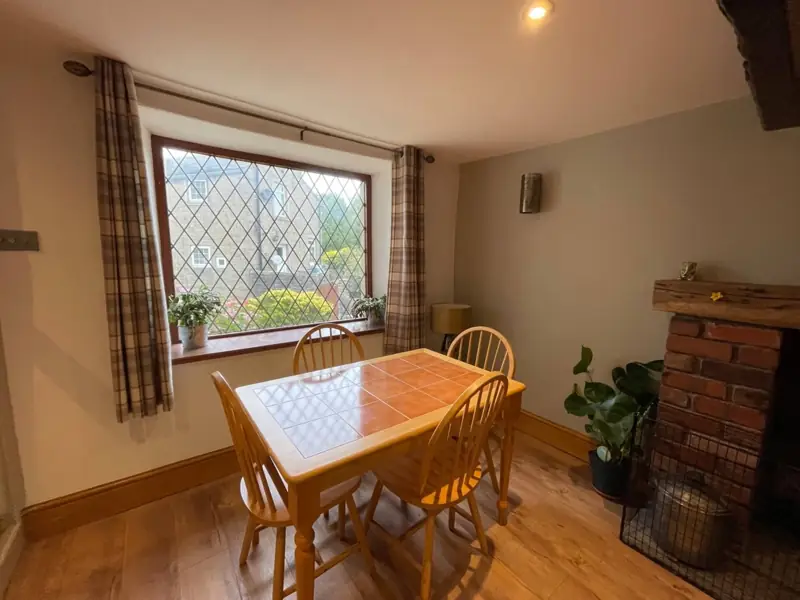
Spring Cottage has stood in Trawden for 300 to 400 years. The total for your stay, including the £40 cleaning fee, shows before you enter any details.
More to explore